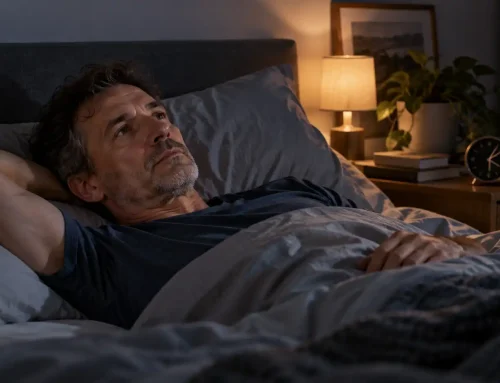
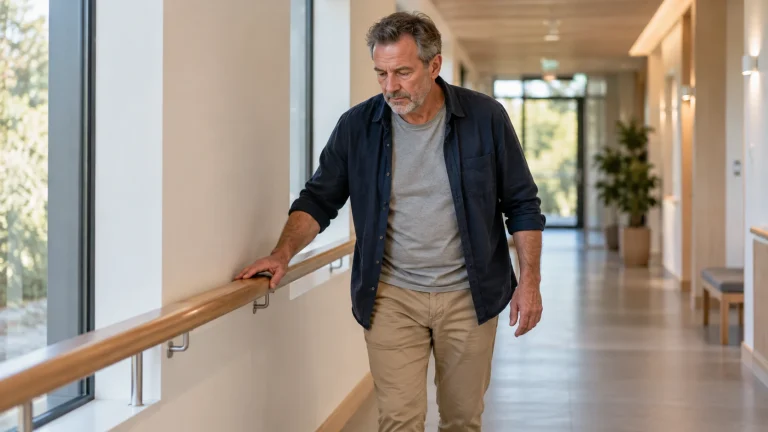
Why do you feel exhausted after a traumatic brain injury?

Important: this article explains possible contributors to exhaustion without establishing the cause of any individual’s fatigue. After a recent head injury with difficulty waking someone, worsening confusion, a seizure, new weakness or an intensifying headache, emergency help is needed: call emergency services immediately.
Emergency numbers
United States: 911
United Kingdom: 999 or 112
European Union: 112
Elsewhere: your local emergency number
After a traumatic brain injury, effort that once seemed automatic may require more attention. Listening in noise, preparing a meal while watching the time or answering several messages may become exhausting. Fatigue is not only about how much you do: it may also depend on the effort involved, sleep, pain, noise sensitivity and other factors. Multiple mechanisms are involved, remain incompletely understood and vary between individuals.
Important
This article provides general information. It cannot diagnose a brain injury or assess the seriousness of an individual situation remotely, and it does not replace an examination or advice from a qualified healthcare professional.
Why can an easy task take so much effort?
Consider a discussion around a table. Before the injury, someone could easily identify the speaker, ignore neighbouring conversations and follow a story while eating. Afterwards, they may need deliberate concentration to keep track. Even seated, they are doing substantial mental work.
This extra effort is not necessarily visible. Someone may smile through a meal and need to lie down afterwards. Their fatigue cannot be inferred from appearance alone. MSKTC describes mental fatigue associated with the increased effort needed to think and concentrate after brain injury.
However, claiming that the brain systematically uses a measurable amount of extra energy for every task would be inaccurate. This image may explain the experience but cannot establish an individual’s biological mechanism. Exhaustion is a clinical experience that deserves description and, if persistent, assessment.
Three demands often combined in one day
Cognitive demands. Reading a complex document, switching topics, finding words or filtering distractions can quickly become tiring. Attention and processing-speed difficulties may require repeating completed steps.
Sensory and physical demands. Bright or noisy surroundings, dizziness, neck pain or balance difficulties can make an outing harder. Symptoms differ between patients and sometimes require specific care.
Emotional demands. Trying not to appear to struggle, repeatedly explaining your condition or managing frustration can also weigh on the day. This does not make symptoms imaginary. Psychological and neurological fatigue can coexist.
Identifying the predominant demand helps select a more precise response: reducing noise will not necessarily address night-time pain; an extra nap will not necessarily solve a succession of overly demanding meetings.
The trap of catching up on days when you feel better
On a good day, someone may be tempted to shop, tidy the whole house and host friends. The next day, exhaustion leads them to cancel everything else. This cycle can be described as alternating overactivity and difficult recovery. It is neither inevitable nor a diagnosis; it invites observation of the relationship between demands and recovery.
Rather than relying only on how you feel at the time, plan the day around an essential task, an enjoyable activity and scheduled breaks. For example, handle an administrative task in the morning, allow quiet time afterwards, then decide a visit’s duration according to your actual condition. The priority is to avoid repeated exhaustion without giving up all activity in the long term.
If physical activity stopped for a long time, resuming it must also take account of deconditioning and any medical limitations. Individual progression is preferable to a target based solely on pre-injury abilities.
How can you explain limits without constantly justifying yourself?
A precise statement is often easier to understand than simply saying you are tired: “I can talk for twenty minutes somewhere quiet, but two hours in a noisy restaurant leaves me exhausted.” This describes conditions, not permanent inability.
You can also suggest alternatives: see fewer people at once, choose somewhere quiet, agree an end time or request written instructions instead of a long spoken explanation. These adjustments do not guarantee fatigue will disappear but may make the activity more accessible.
Those close to the person need neither impose rest nor demand consistent performance. Asking when an activity becomes too demanding helps more than asking why they cannot perform as yesterday. Limits can be reviewed as the situation changes.
What if breaks do not help you recover?
If fatigue remains significant, look for other possible factors rather than adding organisational strategies. Sleep disorders, pain, certain medicines, anxiety or depression, and physical causes unrelated to the injury may contribute. The usual treating doctor can guide assessment according to accompanying signs.
Unrefreshing sleep deserves specific discussion: difficulty falling asleep, frequent waking, daytime drowsiness or reported snoring with breathing pauses. Support must fit the situation; taking a sleeping tablet or changing treatment without medical advice is not a general answer to fatigue.
In activities requiring constant alertness, particularly driving or using dangerous tools, substantial exhaustion may create a safety problem. Seek advice on returning or adapting the activity rather than setting an improvised test.
A small real-life trial to understand things better
Choose an ordinary, non-dangerous activity, such as writing an email. Over a few days, observe when attention quality begins to decline and associated conditions: noise, duration, interruptions and the previous night’s sleep. Then try one adjustment, such as outlining the email first or handling messages at a quiet time.
The purpose is not a medical fatigue score. It is to discover a useful, verifiable change: is the activity interrupted less often? Can the person finish without sacrificing the rest of the day? If the demands remain high or symptoms worsen, discuss the problem with a professional.
Frequently asked questions
Key takeaways
Exhaustion after traumatic brain injury may be influenced by cognitive effort, physical and sensory symptoms, sleep or associated medical factors. Apparently simple activities can be very demanding. Adjusting their surroundings and duration may help, but lasting fatigue needs assessment: no single explanation fits everyone.
Sources
MSKTC — Fatigue After Traumatic Brain Injury
MSKTC — Cognitive Problems after Traumatic Brain Injury
MSKTC — Sleep Problems After Traumatic Brain Injury
Model Systems Knowledge Translation Center, Bell (updated 2024), « Fatigue and Traumatic Brain Injury ». — https://msktc.org/tbi/factsheets/Fatigue-And-Traumatic-Brain-Injury
Assurance Maladie (7 August 2026), « Asthénie (fatigue) : que faire et quand consulter ? ». — https://www.ameli.fr/assure/sante/themes/asthenie-fatigue/bons-reflexes-cas-faut-consulter
Centers for Disease Control and Prevention (15 September 2025), « Symptoms of Mild TBI and Concussion ». — https://www.cdc.gov/traumatic-brain-injury/signs-symptoms/index.html
Service-Public (25 August 2026), « Quels sont les numéros en cas d'urgence ? ». — https://www.service-public.gouv.fr/particuliers/vosdroits/F33954
Last editorial review: October 2026
Partagez cet article, choisissez votre plateforme !
 Numa Costa
The pen name under which I write my articles and develop my editorial websites. Curious by nature, I enjoy understanding how things work, exploring everyday questions and making information easier to understand and use.
→ Learn more about the author