Sexuality after a brain injury
Sexuality may change after brain injury: lower or higher desire, arousal difficulties, fatigue, pain, altered sensations or relationship discomfort. Not everyone experiences these, and there is no single cause. Neurological effects, psychological state, medication, relationships or several combined factors may contribute. Discussing this is legitimate: sexual health contributes to quality of life and deserves non-judgemental care.
No article can remotely establish the cause of an intimate difficulty. First take the person’s experience seriously without immediately imposing a psychological or neurological explanation.
Important
This article provides general information. It cannot diagnose a brain injury or assess the seriousness of an individual situation remotely, and it does not replace an examination or advice from a qualified healthcare professional.
Why can desire or bodily responses change?
Desire and sexual response involve more than one brain function. Sleep, available energy, pain, body image, emotions and relationship context all matter. Someone may want closeness yet feel exhausted before sexual activity. Conversely, they may notice increased sexual preoccupation or unusual difficulty moderating behaviour.
Erection, lubrication or orgasm difficulties are also possible after traumatic brain injury. They are not universal and cannot alone establish feelings towards a partner. Assuming love would make everything as before often adds guilt to a problem needing clinical exploration.
For example, someone reports unchanged desire but avoids evening intimacy because headache and fatigue worsen. The useful question involves not only libido but effort tolerance, timing, pain and opportunities for rest.
Do medicines and hormones play a role?
Some treatments prescribed after brain injury or for its effects may adversely affect desire or sexual response. Hormonal disturbances are also possible in some circumstances. This does not mean every difficulty arises from treatment or everyone needs hormone testing.
Medical discussion may help when change is new, lasting or troublesome. The professional can examine symptoms, review medication and decide whether further assessment is indicated. Do not stop or change medicine yourself to improve sexuality. Removing useful treatment may pose a greater risk than the expected benefit.
Prepare by identifying when change began, whether desire, arousal, pain, satisfaction or the relationship is the main difficulty, and any timing link with starting medication. These observations are not a diagnosis; they make discussion more precise.
Discussing consent, especially when behaviour changes
Sexuality must rest on freely given, ongoing agreement. For some people after brain injury, impulsivity, communication, judgement or comprehension difficulties may complicate awareness of limits and intentions. Neither automatically equate brain injury with inability to consent nor assume cognitive changes have no consequences in every situation.
Each situation requires individual consideration. Doubts about understanding intimacy or respecting others’ limits warrant appropriate professional advice. A partner should not assess this alone and must never face pressure, unwanted touching or dangerous behaviour excused as accident-related.
Simple signals remain essential: being able to say no, stop contact, express discomfort and check the other person understands. Tenderness, conversation and non-sexual closeness may be intimate without becoming mandatory steps towards intercourse.
How can comfortable intimacy return without a performance target?
Resuming intimacy may involve modest adjustments. Choosing less tiring times, reducing noise, keeping a gentle pace and clearly expressing comfort may help. Pain, balance difficulties or movement limitations sometimes justify adaptations discussed with the care team.
There is no obligation to regain a previous frequency, duration or form of sexuality. Success differs between individuals. Sometimes useful progress means discussing the subject without shame; sometimes it means medical advice for pain or a hormonal change.
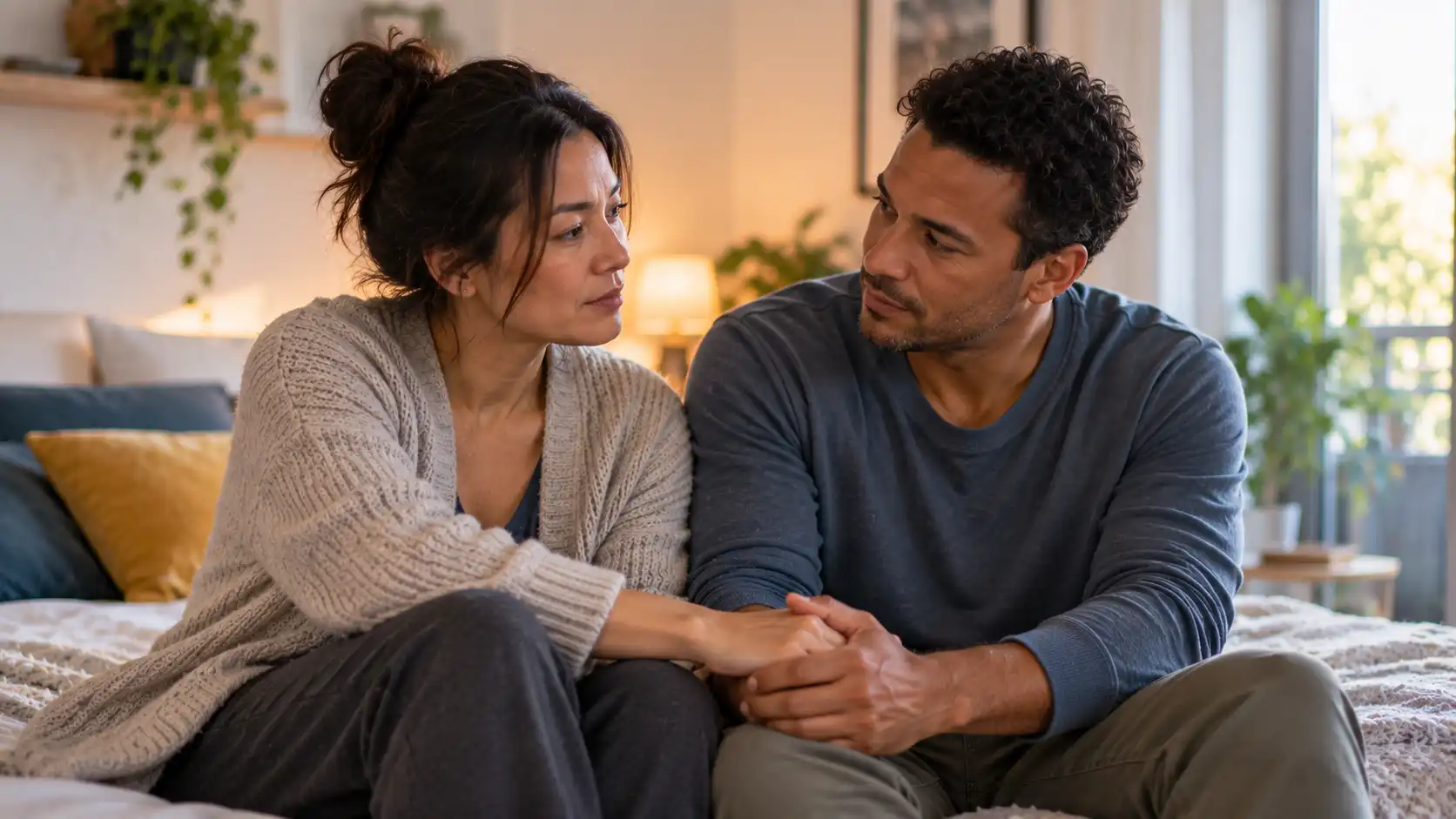
A possible conversation is: “I’d like us to feel close again, but I tire quickly and worry about disappointing you. Could we explore what suits us without needing a particular result?” Talking helps prevent a change being read as personal rejection.
Fertility, contraception and protection remain important
Changed periods or desire does not mean pregnancy is impossible. Appropriate protection against sexually transmitted infections remains relevant according to circumstances. Memory or organisation difficulties may complicate daily contraception; suitable options can be discussed with a professional without assuming what will fit the person.
Gynaecological, urological, pain-related or hormonal difficulties deserve appropriate medical advice. This article proposes no medicine, dose or product as a universal answer.
Which professional should you contact?
The usual treating doctor, a rehabilitation professional or an appropriate specialist may be a first contact. Physical, hormonal or medication-related difficulties need medical assessment; emotional and relationship aspects may also benefit from suitable psychological or psychosexual support. Referral depends on symptoms, circumstances and resources actually available.
Showing a short written list may feel easier than spontaneously raising an intimate topic. Two sentences suffice: what changed and what you want to improve. Confidentiality and respect should guide discussion.
Three points to remember
Sexual difficulty after brain injury is neither inevitable, a personal fault nor proof of lost love. Exploring causes requires considering the body, treatment, fatigue and relationships. Consent, safety and everyone’s choices remain central to adaptations.
Frequently asked questions
Key takeaways
Sexual difficulty after brain injury is neither inevitable, a personal fault nor proof of lost love. Exploring causes requires considering the body, treatment, fatigue and relationships. Consent, safety and everyone’s choices remain central to adaptations.
Sources
MSKTC — Sexuality After Traumatic Brain Injury
MSKTC — Relationships After Traumatic Brain Injury
MSKTC — Emotional Changes After Traumatic Brain Injury
Last editorial review: October 2026
Partagez cet article, choisissez votre plateforme !
 Numa Costa
The pen name under which I write my articles and develop my editorial websites. Curious by nature, I enjoy understanding how things work, exploring everyday questions and making information easier to understand and use.
→ Learn more about the author